
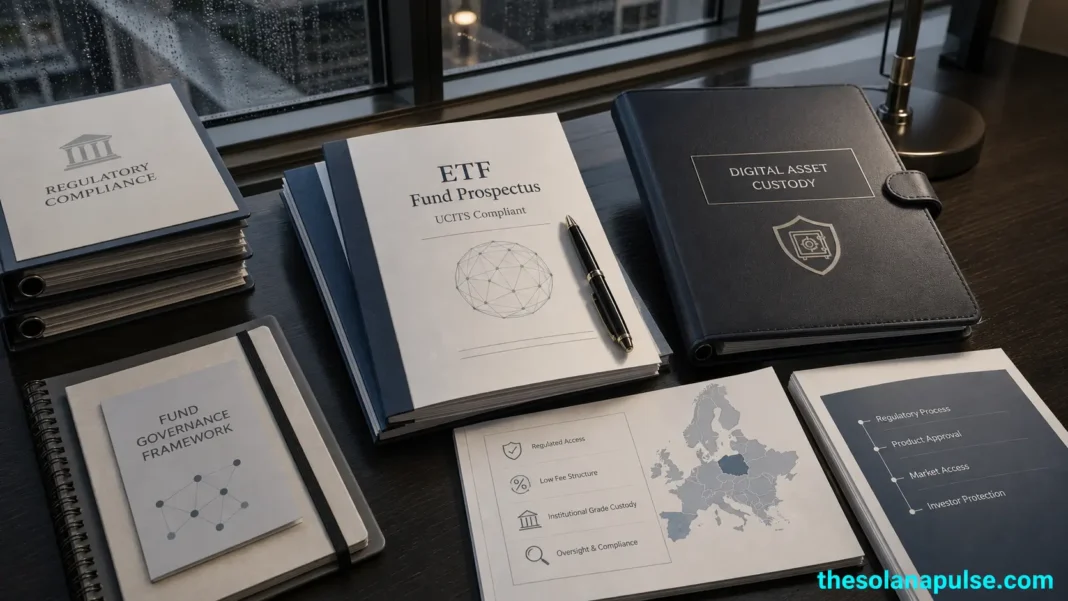
Morgan Stanley’s recent amendment to its Ethereum and Solana ETF filings marks a significant step in the institutional adoption of crypto assets. By setting the sponsor fee at 0.14%, the firm positions its ETFs as the lowest-cost options in the U.S. market, potentially reshaping the competitive landscape for crypto-related financial products.
The Decision
The amended filings submitted to the Securities and Exchange Commission (SEC) on June 18, 2026, represent Morgan Stanley’s strategic initiative to expand its crypto offerings. This marks the second amendment round for the Ethereum (ETH) and Solana (SOL) ETF applications, initially filed in January 2026. The decision underscores their commitment to providing cost-effective investment vehicles in the burgeoning crypto ETF market.
Staking providers Figment Inc, Galaxy Blockchain Infrastructure LLC, and Coinbase Canada Inc have been named in the filings, enhancing the ETFs’ value proposition by integrating staking rewards, with 5% of staking returns allocated to these providers. This move not only incentivizes passive income but also aligns with the growing trend of incorporating staking into institutional investment strategies.
Industry Reaction
The crypto industry has responded positively to Morgan Stanley’s proactive approach, seeing it as a catalyst for broader institutional engagement. By offering ETFs with competitive fees, Morgan Stanley is setting a new standard that could pressure other financial institutions to reevaluate their fee structures. This development is particularly relevant given the existing landscape where Grayscale’s Mini Ethereum Trust and Franklin Templeton’s SOEZ dominate with higher costs.
In addition, the integration of staking into the ETFs is seen as a forward-thinking move that addresses the evolving needs of modern investors, who are increasingly interested in maximizing returns through diversified income streams beyond traditional capital gains.
Precedent & Implications
The filing of these low-fee ETFs could set a precedent for how traditional financial giants approach the cryptocurrency market. With ETFs being a familiar product for many investors, the introduction of cost-efficient crypto ETFs could lower the barrier to entry for retail and institutional investors alike. This could spur a wave of similar filings from other financial institutions seeking to capture market share in the crypto space.
Moreover, the involvement of prominent staking providers like Figment, Galaxy Blockchain Infrastructure, and Coinbase Canada highlights a growing trend of integrating blockchain technology into mainstream financial products, potentially increasing the attractiveness of these ETFs as hybrid investment vehicles.
Market Response
While the immediate market response to the ETF filings has been muted, the long-term implications could be substantial. For Solana and Ethereum, increased institutional participation through ETFs could enhance liquidity and stabilize market prices by broadening the investor base. This aligns with Morgan Stanley’s broader strategy to embed itself deeper into the crypto ecosystem, as evidenced by its recent Bitcoin Trust launch, which attracted significant investor attention.
As these ETFs progress through the regulatory process, their approval could catalyze a new era of institutional crypto investment, potentially driving a reallocation of capital within the digital asset markets.
Morgan Stanley’s strategic ETF push could redefine institutional crypto engagement.
Editor’s Insight
TheSolanaPulse sees Morgan Stanley’s low-fee ETF filings as a pivotal moment in the institutional adoption of crypto assets. By lowering entry costs and integrating staking, these ETFs are poised to appeal to a broader spectrum of investors, potentially accelerating the mainstream acceptance of Solana and Ethereum.
Looking ahead, the success of these ETFs could encourage other financial institutions to innovate and compete, further strengthening the crypto market’s infrastructure and credibility.