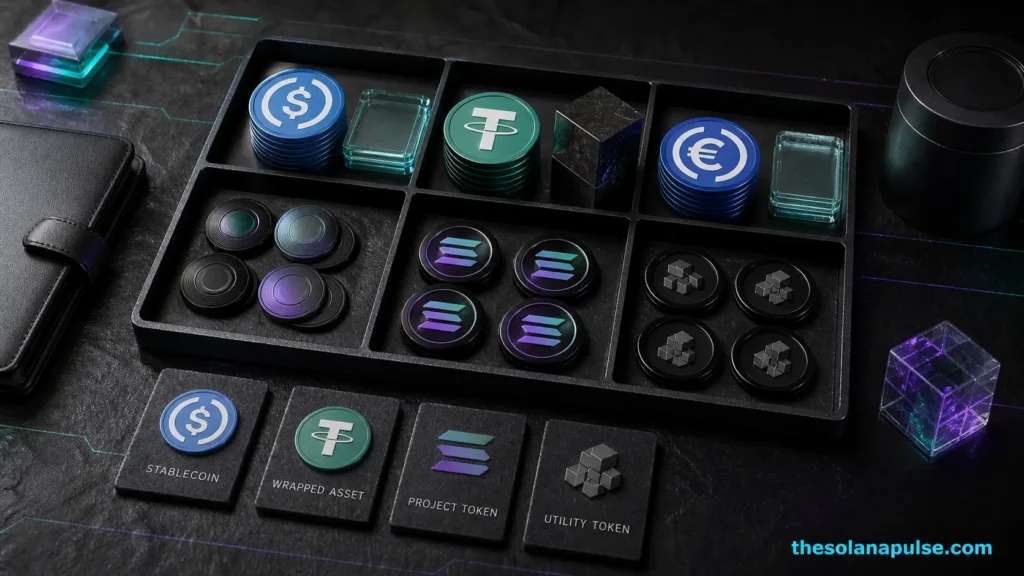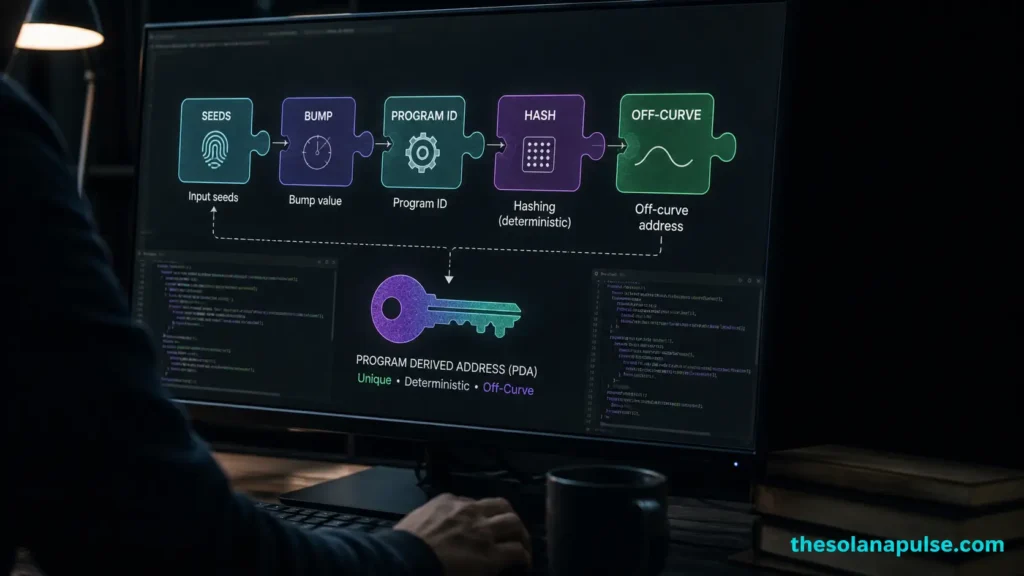

Staking is one of the core mechanisms that helps secure Solana. For SOL holders, it also creates a way to earn protocol rewards without selling their tokens. But “staking SOL” can mean several different things: delegating directly to a validator through a native stake account, using a liquid staking pool and receiving a liquid staking token, or staking through a wallet interface that abstracts most of the underlying account mechanics.
Those options are not identical. Native staking keeps the delegation under the authorities of your own stake account and avoids liquid-staking smart-contract exposure, but your SOL is not immediately spendable while the stake is active and it must deactivate before withdrawal. Liquid staking can provide more flexibility because you receive a token representing your position, but that flexibility introduces additional protocol, liquidity and integration risks.
This guide explains the mechanics behind both approaches, how rewards are generated, what happens during activation and unstaking, how to evaluate validators, how Phantom and Solflare currently handle native staking, and where liquid staking products such as JitoSOL fit into the Solana ecosystem. The goal is not to identify a single “best” staking method. It is to give SOL holders enough verified information to understand the trade-offs before they delegate capital.
Primary source: Solana staking documentation ↗
- Native staking delegates SOL to a Solana validator through a stake account while the token holder retains control through the stake and withdraw authorities.
- Solana staking rewards vary. Official Solana educational material currently describes approximately 5–7% annual rewards, but actual yield changes with network inflation, the percentage of SOL staked, validator performance and validator commission.
- Staking and unstaking are not always immediate. Native stake changes state at epoch boundaries, and Solana epochs are approximately two days long. Network-wide activation and deactivation limits can make the process take longer in unusual conditions.
- Rewards are calculated and issued once per epoch and are deposited into the stake account. Those rewards become part of the delegated stake, creating an automatic compounding effect while the account remains active.
- A validator does not gain ownership of SOL simply because stake is delegated to it. Delegation changes the validator’s stake weight; it does not transfer the withdraw authority to the validator.
- One native stake account can delegate to only one validator at a time. To spread SOL across several validators, a user needs multiple stake accounts or must split an existing stake account.
- Phantom and Solflare currently document a 1 SOL minimum for new native staking positions in their wallet interfaces. Users should also keep unstaked SOL available for transaction fees.
- Liquid staking is different from native staking. A liquid staking pool issues a token such as JitoSOL that represents a claim on pooled staked SOL and can often be used in DeFi while staking rewards accrue.
- Native staking avoids liquid-staking protocol and token-liquidity risks, while liquid staking provides more flexibility and DeFi composability. Neither approach is risk-free.
- Validator selection matters. Commission, vote performance, uptime, concentration of stake, operational history and decentralization all influence the quality of a delegation decision.
Stake SOL natively with Phantom in 6 steps
Open Phantom and select Solana from the token list.
Click More, then choose Stake SOL.
Select Native Staking rather than liquid staking.
Compare commission, vote performance, uptime and decentralization before choosing.
Enter at least 1 SOL and keep some unstaked SOL available for network fees.
Confirm the transaction. The stake first appears as Activating and earns rewards after it becomes Active.
Current Phantom requirement: new native stake positions are created through the Phantom browser extension and require a minimum of 1 SOL. Phantom says activation typically completes within about 2–3 days, depending on epoch timing. Official Phantom guide ↗
Staking Snapshot
The figures above are operational references, not promises of return. Wallet requirements, reward rates and network parameters can change, so they should be rechecked before publication updates or large transactions.
What Is SOL Staking?
Solana uses Proof of Stake as part of its consensus design. Validators participate in consensus by voting on the state of the blockchain, and those votes are stake-weighted. In simple terms, SOL delegated to a validator increases the weight of that validator in the network’s consensus process.
A holder who stakes SOL is therefore doing two things at once. First, the holder is assigning stake weight to a validator that helps run and secure the network. Second, the holder becomes eligible to receive a share of staking rewards associated with that delegated stake, after the validator’s commission is taken into account.
Delegation does not mean sending ownership of the SOL to the validator. Solana’s official staking documentation states that delegators retain control of their tokens. The validator receives stake weight, while the stake account remains controlled by its configured authorities.
That distinction matters. In native staking, the SOL is moved into a dedicated Solana stake account. A stake account is not the same as the ordinary system account used to send and receive SOL. Stake accounts have additional state and authorities that allow them to be delegated, deactivated, split, merged and withdrawn under specific rules.
Primary source: Stake accounts on Solana ↗
How Solana Native Staking Works
The native staking flow can be summarized in five steps:
- You hold SOL in a self-custody wallet that supports native staking.
- The wallet creates or manages a stake account for the amount you want to stake.
- You select a validator and delegate the stake account to that validator.
- The stake enters an activating state and becomes eligible for rewards once it is active.
- When you want the SOL back as an available wallet balance, you deactivate the stake, wait for deactivation to complete, and then withdraw it from the stake account.
The stake account is important because it separates delegated SOL from the immediately spendable SOL in your main wallet. An active stake account cannot simply be used like a normal wallet balance. It must first become inactive before its SOL can be withdrawn.
Solana stake accounts also use two important authorities: the stake authority and the withdraw authority. The stake authority can delegate, deactivate, split and merge stake and can change the stake authority. The withdraw authority has greater control because it can withdraw inactive SOL and can change both the withdraw and stake authorities. Protecting the withdraw authority is therefore critical.
For most users, a wallet such as Phantom or Solflare hides much of this account-level complexity. The wallet presents a staking interface, creates the stake account and submits the required transactions. But understanding the underlying model is useful because it explains why staked SOL can show a separate status, why unstaking is not instantaneous and why several stake accounts may appear under one wallet.
How native SOL staking moves from wallet to rewards
The wallet simplifies the interface, but the underlying process still follows Solana’s stake-account model.
Keep SOL in a self-custody wallet and leave a small amount unstaked for transaction fees.
The wallet creates or manages a dedicated stake account for the amount being delegated.
Choose a validator after reviewing commission, vote performance, uptime and concentration.
The stake enters an activating state and becomes reward-eligible after activation completes.
Rewards are deposited into the stake account and become part of the delegated balance.
Source framework: Solana staking and stake-account documentation. Timing is state-dependent and may vary by epoch and network conditions.
Native Staking vs. Liquid Staking
The biggest staking decision is usually whether to stake natively or use liquid staking.
Native staking
With native staking, SOL is delegated directly through a Solana stake account to a validator. The holder retains the stake-account authorities. Rewards are paid in SOL into the stake account. There is no liquid staking token involved.
Advantages:
- Direct participation in Solana’s validator staking system.
- No need to hold a separate staking derivative.
- No liquid-staking pool smart-contract or token-liquidity exposure.
- Direct choice of validator.
- Rewards are added to the stake account automatically.
Trade-offs:
- Active SOL cannot be freely transferred or used in DeFi.
- Unstaking requires deactivation and a later withdrawal.
- Users must evaluate validator performance and commission.
- Managing several validators generally means managing several stake accounts.
Liquid staking
With liquid staking, a user deposits SOL into a stake pool or liquid staking protocol and receives a liquid staking token, or LST, representing the staked position. JitoSOL is one example. The underlying pool delegates SOL according to its validator strategy, while the user holds a transferable token that can potentially be traded or used elsewhere in DeFi.
The attraction is capital efficiency: the underlying SOL remains staked while the LST can remain liquid. The trade-off is that the user is no longer exposed only to native stake mechanics. The position also depends on the liquid staking protocol, its program design, pool operations, liquidity, integrations and the market value of the LST relative to its redemption value.
A liquid staking token should therefore not be treated as identical to native SOL. It is a separate on-chain asset representing an interest in pooled stake.
Primary source: Jito liquid staking basics ↗
What You Need Before Staking SOL
Before staking, prepare the position rather than clicking the first “Stake” button you see.
1. A wallet that supports your chosen staking method
Native staking support varies by wallet and platform. Phantom currently supports creating native stakes through its browser extension. Solflare supports native staking through its staking interface and publishes separate desktop and mobile instructions.
2. Enough SOL to stake
Phantom and Solflare currently document a minimum of 1 SOL for new native staking positions in their wallet interfaces. This is a practical minimum for users following those wallet flows.
3. SOL left outside the stake account
Do not stake every last fraction of SOL in the wallet. You still need a small amount of liquid SOL to pay transaction fees for future actions. Solflare explicitly recommends keeping SOL available for staking and unstaking transactions.
4. A validator-selection process
A validator should not be chosen solely because it appears first in a wallet list. Commission, performance, vote behavior, concentration and operational history matter.
5. A realistic liquidity plan
If you might need the SOL immediately, native staking may not fit that requirement because deactivation takes time. Liquid staking may offer faster exit routes through secondary-market liquidity, but that convenience comes with additional risks and possible fees or slippage.
How to Stake SOL Natively With Phantom
What the Phantom native-staking path looks like
1–2: Open Solana, then More → Stake SOL.
3: Choose Native Staking for direct validator delegation.
4–6: Select a validator, enter the amount, then confirm Stake.
This is a custom instructional diagram, not a screenshot of Phantom. Interface labels and workflow are based on Phantom’s current native-staking support guide.
As of October 2026, Phantom’s help documentation says native stake creation is available through the Phantom browser extension. The interface requires at least 1 SOL for a native stake.
The current documented flow is:
- Open Phantom and select Solana from the token list.
- Select More and then Stake SOL.
- Choose Native Staking.
- Select a validator.
- Enter the amount of SOL to stake, meeting the wallet’s minimum requirement.
- Review the transaction and confirm.
After confirmation, the position appears as Activating. Phantom states that rewards begin once the stake becomes Active, typically after the activation period.
The important point is that the SOL is not transferred to the validator’s spendable balance. It is placed in a stake account under the user’s control and delegated to the validator.
Phantom also provides reward information for native stake accounts, while full epoch-by-epoch history can be reviewed with compatible explorers or staking tools.
Primary source: Phantom native SOL staking guide ↗
How to Stake SOL Natively With Solflare
Solflare native staking: the current documented sequence
Open Solflare and go to the Staking tab.
Click Stake and enter the amount to delegate. Solflare currently documents a 1 SOL minimum.
Review the estimated return, validator performance and commission, then choose the validator.
Confirm the transaction. The stake then moves through Solana’s activation process before normal rewards begin.
Solflare also currently documents a temporary 0.002 SOL stake-account reserve that is refundable when the stake account is withdrawn and closed. Source: Solflare Help Center ↗.
Solflare offers a similar native staking process and supports staking through its wallet interface.
The current documented process is:
- Open Solflare and go to the Staking or Stake section.
- Select Stake.
- Enter the amount of SOL to delegate.
- Review the estimated annual return and validator information shown by the wallet.
- Choose the validator you want to support.
- Confirm the staking transaction.
Solflare currently states that new native stake accounts require at least 1 SOL. It also notes a temporary account-reserve amount of about 0.002 SOL when opening a stake account, which is returned when the stake account is later closed. Because wallet implementations and rent/account requirements can change, users should rely on the amount shown in the live transaction preview when they actually stake.
After the transaction, the position must activate before it earns normal staking rewards. Solflare’s current support material cautions that activation may take multiple days depending on epoch timing and network conditions.
Primary source: Solflare native staking guide ↗
How to Choose a Solana Validator
Validator selection is one of the most important parts of native staking because the validator’s performance and commission affect the delegator’s realized rewards.
Commission
Validators charge commission on inflationary staking rewards. A 0% commission is not automatically “better” in every respect, and a higher commission is not automatically bad. Commission should be considered together with operational performance, reliability, transparency and decentralization.
The validator’s commission is taken from the rewards generated by delegated stake; the remainder is credited to delegators according to their active stake.
Vote performance and uptime
Validators earn vote credits by correctly participating in consensus. Solana uses those vote credits when calculating rewards. A validator that consistently misses votes can generate lower effective rewards than a well-performing validator.
Solana’s educational material recommends reviewing uptime and performance rather than choosing on commission alone.
Stake concentration
Delegating only to the largest validators can increase concentration. From a network-health perspective, spreading stake across competent validators can support decentralization and reduce the amount of consensus weight controlled by the largest operators.
Operational history
Consider how long the validator has been active, whether it publishes information about its infrastructure or team, whether commission changes are transparent, and whether its performance is consistent across many epochs rather than one short period.
Identity and trust signals
Some validators publicly identify their operators, publish websites and provide contact information. Others are pseudonymous. Identity alone does not guarantee performance, but it is one of several trust signals users can consider.
Do not chase APY in isolation
Displayed APY is a moving estimate. A validator can temporarily rank highly and later underperform, change commission or experience downtime. A long-term staking decision should be based on several metrics, not one headline yield figure.
Useful validator-comparison tools cited by wallet documentation include validators.app and other community dashboards. Solana Foundation does not recommend a particular validator, so selection remains the delegator’s responsibility.
Do not choose a validator on APY alone
A stronger selection process balances economics, performance and decentralization.
Check the percentage retained by the validator and whether it has changed materially over time.
Poor validator performance can reduce the rewards a delegator actually realizes.
Delegating outside the largest operators can support a more distributed validator set.
Review stability, identity, transparency and evidence of sustained validator operations.
Native delegation gives the validator stake weight; it does not give the validator your withdraw authority.
A slightly higher displayed APY is not automatically better if the validator is weaker on other factors.
How SOL Staking Rewards Are Calculated
Staking yield is not a fixed interest rate.
Solana’s official staking documentation explains that yield depends primarily on several moving inputs:
- the network’s inflation rate;
- the percentage of total SOL that is actively staked;
- the validator’s vote performance and uptime;
- the validator’s commission rate;
- the amount of stake that is active and eligible during a given epoch.
Solana’s inflation design began with an 8% annual inflation parameter, a 15% annual disinflation parameter and a long-term target rate of 1.5%. Those parameters describe the issuance schedule; they do not mean that a staker simply earns the inflation rate.
The staking yield is produced by distributing eligible issuance across active stake and validator vote accounts, after accounting for validator commission and actual performance. That is why the annualized yield can vary from epoch to epoch.
Solana’s current educational guide describes staking rewards at roughly 5–7% annually. That range is a useful orientation, not a guaranteed rate. A wallet or validator dashboard may show a more current estimate at the moment of staking.
Rewards are issued every epoch
Solana states that staking rewards are computed and issued once per epoch. An epoch is approximately two days. Rewards earned in one epoch are issued at the beginning of the following epoch.
Rewards compound automatically
Rewards are deposited into the stake account that earned them and are automatically re-delegated as active stake. As a result, a native staking position can compound in SOL terms without the user manually claiming and restaking every reward payment.
Commission reduces the delegator’s share
Validator commission is taken at reward distribution. A validator charging a higher commission leaves a smaller share of the gross reward for delegators, all else equal. But “all else equal” is the important part: a low-commission validator with poor voting performance may still be less attractive than a consistently strong validator charging a reasonable fee.
How Solana staking rewards are actually issued
This block uses protocol documentation rather than a made-up return projection.
Solana states that staking rewards are computed and issued once per epoch.
Epoch duration is approximate and should not be treated as a fixed wall-clock guarantee.
Annualized staking yield changes as network inflation and total active stake change.
Validator voting behavior and earned vote credits affect reward outcomes.
Validator commission affects the portion of rewards ultimately received by delegators.
Displayed or historical staking rates should not be presented as guaranteed future returns.
Source: Solana — Staking and Solana staking documentation.
How Long Does SOL Take to Start Earning Rewards?
Native stake does not normally earn full rewards immediately after the delegation transaction.
A new delegation begins in an activating or warming up state. Solana’s official staking FAQ says stake state changes complete at epoch boundaries, and an epoch is approximately two days. In normal conditions, a delegation submitted during an epoch becomes active at a later epoch boundary.
There is also a network-wide constraint on how much stake can activate or deactivate in one epoch. Solana’s documentation states that no more than 25% of total active stake can change state in a single epoch. If an unusually large amount of SOL is entering or leaving staking at the same time, some stake may remain activating or deactivating for additional epochs.
This is why wallet documentation may describe staking as taking two to three days, or in some cases longer, rather than promising a fixed number of hours.
The practical rule is simple: treat activation time as variable and check the stake account’s live status instead of assuming the position is earning immediately after the transaction confirms.
How to Unstake SOL
The four states readers should recognize in a wallet
Delegation was submitted, but the stake is not yet fully active or earning normal rewards.
The stake is delegated and eligible for staking rewards, subject to validator performance and network rules.
An unstake request has been submitted, but the SOL is not yet available to withdraw.
The stake is no longer delegated and can be withdrawn back to the normal wallet balance.
Sources: Phantom native staking guide and Solana staking documentation.
Native unstaking has two stages: deactivation and withdrawal.
- Open the wallet’s staking section.
- Select the active stake account you want to exit.
- Choose Unstake, Deactivate or the wallet’s equivalent action.
- Confirm the transaction.
- Wait for the stake to become inactive.
- Withdraw the inactive SOL from the stake account back to your available wallet balance.
An important beginner mistake is assuming that clicking “Unstake” instantly returns spendable SOL. It does not. The stake first enters a deactivating state. Only after deactivation completes can the SOL be withdrawn.
Solana’s official documentation ties deactivation to epoch boundaries and notes that network-wide warmup/cooldown constraints can extend the process. Solflare likewise shows a separate withdrawal step after standard unstaking has finished.
If liquidity timing matters, check the current epoch position before starting the process. Starting near an epoch boundary may complete sooner than starting immediately after a new epoch begins, although network conditions can still affect the result.
Unstaking SOL is a two-stage exit, not an instant withdrawal
The exact timing depends on epoch boundaries and network-wide stake activation/deactivation conditions.
Your wallet submits a transaction that changes the stake account toward deactivating status.
TransactionThe stake is still not freely spendable while deactivation is in progress.
Epoch-basedOnce fully inactive, the delegated SOL is eligible to be withdrawn from the stake account.
State completeA separate withdrawal makes the SOL available again in the normal wallet account.
Available SOLWhat Happens If You Want to Stake With More Than One Validator?
A single Solana stake account can delegate to only one validator at a time.
If you want to diversify 100 SOL across four validators, for example, you cannot point one 100-SOL stake account at four validators simultaneously. Instead, you would use multiple stake accounts, such as four 25-SOL accounts, and delegate each one independently.
Solana supports splitting stake accounts, which allows an existing stake account to be divided into smaller stake accounts under compatible authorities. It also supports merging certain stake accounts when their states and authorities meet the required conditions.
This account model gives advanced users fine-grained control over validator allocation, but it also means they must keep track of multiple stake addresses and states.
Native Staking Risks
Native staking is simpler than many DeFi strategies, but it is not risk-free.
SOL price risk
Staking rewards are paid in SOL. If SOL falls sharply in fiat terms, a positive staking yield does not prevent the market value of the position from declining.
Liquidity risk
Active native stake cannot be spent immediately. A user who needs liquidity must deactivate and withdraw the position, which takes time.
Validator-performance risk
A validator with weak vote performance or downtime can reduce realized rewards compared with a stronger validator.
Commission-change risk
Validator commission can change. Long-term stakers should periodically review their validator rather than assuming the terms will remain unchanged forever.
Key-management risk
The stake and withdraw authorities control important actions. Loss or compromise of the withdraw authority can be especially serious because it can control withdrawal of inactive SOL and authority changes.
Slashing: understand the current state
Many Proof-of-Stake networks use slashing to destroy part of a validator’s or delegator’s stake after certain forms of malicious behavior. Solana’s current staking reference states that in-protocol slashing is not implemented today, while describing slashing as a possible future mechanism. This is a parameter that could change over time and should be rechecked in future editions of the guide.
That means users should not copy generic “you can currently lose delegated SOL through automatic Solana slashing” language from guides written for other networks without verifying Solana’s actual protocol state.
Native staking prioritizes direct validator delegation and fewer protocol layers. Liquid staking prioritizes liquidity and DeFi composability, with additional protocol and market risk.
Liquid Staking: When Flexibility Matters
Liquid staking is designed for users who want staking exposure without giving up all on-chain liquidity.
Instead of maintaining a native stake account directly, a user deposits SOL into a liquid staking pool and receives an LST. The pool delegates the underlying SOL across validators according to its own strategy. The LST represents the user’s share of the pool and can often be transferred, traded or used in DeFi.
JitoSOL is a prominent example. Jito’s documentation describes two broad ways to acquire it: minting through the staking flow or obtaining it through a market swap. Users can also convert eligible existing stake accounts into JitoSOL through Jito’s tooling.
Why liquid staking can be useful
- The LST can remain transferable while the underlying capital is staked.
- It can potentially be supplied to lending markets or used in other DeFi strategies.
- A stake pool can distribute stake across multiple validators rather than requiring the user to select only one per stake account.
- Some liquid staking designs may include additional reward sources or validator-selection strategies.
Additional risks
Liquid staking adds layers that native staking does not have:
- smart-contract or program risk;
- stake-pool governance and operational risk;
- LST liquidity risk;
- price deviation between the LST’s market price and its underlying redemption value;
- DeFi integration risk if the LST is used as collateral or deposited into another protocol;
- liquidation risk if the LST is borrowed against or leveraged.
An LST can make staked capital more usable, but each extra layer creates another failure mode. A user who wants the simplest possible staking exposure may prefer native staking. A user who values liquidity and understands DeFi risk may prefer a liquid staking route.
How to Stake SOL for JitoSOL
Jito’s current documentation describes a direct staking flow that can be used with wallets including Phantom and Solflare.
At a high level:
- Visit the official Jito staking interface.
- Connect a supported Solana wallet.
- Confirm that the connected wallet address is correct.
- Enter the amount of SOL to stake.
- Choose the available staking route, such as direct mint where appropriate.
- Review the expected JitoSOL amount and transaction details.
- Approve the transaction in the wallet.
Jito recommends keeping enough SOL for network fees. Its interface also supports conversion of certain existing native stake accounts into JitoSOL.
Because liquid staking involves a third-party staking protocol, users should verify the official domain, understand the redemption/unstaking mechanics and review current fees before signing.
Primary source: JitoSOL staking flow ↗
Do not compare native staking and liquid staking only by displayed yield. Liquidity, custody model, smart-contract exposure, validator choice and exit mechanics matter too.
Selected JitoSOL validator eligibility thresholds
These are JitoSOL stake-pool eligibility criteria, not universal Solana validator requirements. They are included here as a real-world example of how a liquid-staking pool filters validators.
Jito states that eligible validators must meet all listed binary requirements, including the commission limits above, avoiding the validator superminority, running the Jito MEV-enabled client, and meeting other operational/safety criteria. Criteria are subject to change.
Source: Jito Foundation — Delegation Criteria .
Native Staking vs Liquid Staking: Side-by-Side
| Feature | Native SOL Staking | Liquid Staking |
|---|---|---|
| Asset held | Native SOL in stake account | Liquid staking token representing pooled stake |
| Validator choice | User chooses validator | Usually determined by pool strategy |
| Liquidity while staked | Limited | LST can generally be transferred/traded |
| Standard exit | Deactivate, then withdraw | Redemption/unstaking or market swap depending on protocol |
| Smart-contract/pool exposure | Lower | Higher because a staking protocol/pool is involved |
| DeFi usability | Active native stake is not freely usable | LST may be used in supported DeFi protocols |
| Reward source | Native staking rewards | Native rewards plus any protocol-specific economics |
| Complexity | Lower | Higher |
| Best suited to | Users prioritizing direct delegation and simplicity | Users prioritizing liquidity/composability and accepting added risk |
Security Checklist Before You Stake
Staking transactions are easy to initiate, which makes security discipline even more important.
Verify the wallet and website
Download wallets from their official sources and bookmark official staking domains. Search ads, fake extensions and impersonation sites are common attack vectors in crypto.
Never share a recovery phrase or private key
A legitimate validator, staking pool, wallet support agent or media publication does not need your recovery phrase to help you stake.
Review the transaction in the wallet
Confirm the amount, network and action before approving. If a transaction asks for permissions that do not match the intended staking action, stop and investigate.
Keep transaction-fee SOL available
A wallet with every SOL committed can make future management inconvenient. Keep an operational balance outside the stake account.
Protect the withdraw authority
For advanced stake-account setups, the withdraw authority is especially sensitive. Hardware-wallet or institutional custody arrangements may be appropriate for large positions.
Recheck validator conditions periodically
Performance and commission can change. Staking should not be treated as a set-and-forget decision forever.
How to Track Your SOL Staking Rewards
Wallets usually show the current stake status and recent rewards. For deeper verification, stake-account addresses can also be inspected through Solana explorers and staking dashboards.
Solana’s RPC includes methods for querying inflation rewards, and its CLI includes commands for viewing stake accounts, validators, stake history and cluster minimum delegation. Advanced users can therefore independently verify account state rather than relying only on a wallet’s summary screen.
For most holders, the useful metrics are:
- current stake-account status: activating, active, deactivating or inactive;
- validator identity;
- delegated SOL;
- validator commission;
- most recent reward;
- reward history by epoch;
- effective annualized return over a meaningful period, rather than a single epoch.
Common SOL Staking Mistakes
Staking all available SOL
Leaving no SOL for transaction fees can create unnecessary friction when managing the position later.
Choosing only by headline APY
Displayed APY can change. Commission, voting performance and operational reliability matter too.
Assuming “unstake” means “withdraw now”
Native stake must deactivate before it can be withdrawn.
Confusing native staking with liquid staking
Native stake is a stake account holding SOL. Liquid staking usually gives the user a separate token representing pooled stake. The risk profile is different.
Treating an LST as risk-free SOL
An LST may trade in a market and be used in DeFi. That adds market, liquidity, smart-contract and integration risks beyond native staking.
Ignoring decentralization
Delegating to the biggest validator by default may be convenient, but stake concentration matters to network resilience. Competent smaller validators can contribute to a healthier distribution of stake.
Believing a validator can simply spend delegated native SOL
Native delegation does not transfer ownership of the stake account to the validator. The validator gains stake weight, not the user’s withdraw authority.
Advanced: Stake Authorities, Splitting and Merging
Most wallet users do not need to manage Solana stake accounts manually, but larger holders and technical users should understand the tools available.
A stake account can have separate stake and withdraw authorities. This allows an organization, for example, to let one operational signer manage delegation decisions while a more secure signer retains withdrawal control.
Stake accounts can also be split. This is useful when a holder wants to move part of an existing position to a different validator or create separate allocations without first withdrawing all SOL to the main wallet.
Merging is more restrictive. Solana allows certain stake accounts with compatible authorities, lockups and delegation states to be merged, while transient states can prevent merging. Users managing stakes through the command line should inspect account state before attempting these operations.
The Solana CLI exposes commands including create-stake-account, delegate-stake, deactivate-stake, withdraw-stake, split-stake, stake-account and stake-authorize. These tools are powerful but should only be used by users who understand signer and cluster configuration, because mainnet commands move real assets.
Primary source: Solana CLI stake workflows ↗
Why Staking Matters for the Solana Ecosystem
Staking is not simply a yield feature. It is part of the network’s security and governance economics.
Because consensus votes are stake-weighted, the distribution of delegated SOL influences how consensus power is distributed across validators. A network with stake spread across many reliable operators is more resistant to concentration than one in which most stake sits with a small set of validators.
Staking also connects SOL’s token economics to network participation. Inflationary issuance used for staking rewards incentivizes holders to participate in securing the network rather than remaining entirely passive. At the same time, the proportion of total SOL staked affects how those rewards are distributed and therefore influences realized staking yield.
Liquid staking extends that role into DeFi. LSTs can allow staked capital to remain active in lending, trading and collateral markets, creating a link between validator economics and on-chain liquidity. But that composability can also transmit risk between staking and DeFi protocols, which is why liquid staking should be evaluated as a layered financial product rather than as “native staking with instant access.”
Editor’s Insight
For most first-time SOL stakers, the central decision is not “which APY is highest?” It is whether they want direct native delegation or liquid, DeFi-compatible staking exposure.
Native staking is structurally easier to understand: SOL sits in a stake account controlled by the holder’s authorities, one validator is selected per stake account, rewards accrue in SOL and exiting requires deactivation followed by withdrawal. Liquid staking introduces more flexibility, but the user is now relying on a pool, an LST and potentially additional DeFi protocols.
That distinction should drive the staking method. Users who prioritize simplicity, direct validator choice and fewer protocol layers may prefer native staking. Users who understand smart-contract and liquidity risk and want to keep staked capital usable on-chain may find liquid staking more suitable.
TheSolanaPulse’s editorial view is that staking yield should be evaluated after security, custody and liquidity requirements—not before them.
What to Watch
Watch how delegated SOL is distributed across the validator set. A more balanced distribution can support decentralization and reduce reliance on the largest operators.
Staking APY is variable. Changes to inflation, the share of SOL staked and validator economics can affect future rewards.
Growth in LST adoption can increase capital efficiency in Solana DeFi, but it also increases the importance of pool security, secondary-market liquidity and collateral risk controls.
Solana’s current reference says in-protocol slashing is not implemented. Any future implementation would materially change the risk model for validators and delegators and should trigger an update to this guide.
Frequently Asked Questions
How much SOL do I need to stake?
Phantom and Solflare currently document a 1 SOL minimum for new native staking positions in their wallet interfaces. Keep additional unstaked SOL available for transaction fees. Network and wallet requirements can change, so verify the live interface before staking.
How much can I earn by staking SOL?
There is no fixed guaranteed return. Solana’s current educational material describes approximately 5–7% annual staking rewards, but realized yield changes with inflation, the total percentage of SOL staked, validator vote performance and validator commission.
How often are SOL staking rewards paid?
Solana calculates and issues staking rewards once per epoch. An epoch is approximately two days. Rewards are deposited into the stake account and become part of the delegated stake.
Does staking SOL mean giving my tokens to a validator?
No. Native delegation increases a validator’s stake weight, but the validator does not receive the user’s stake-account withdraw authority. The staker retains control through the stake-account authorities.
Can I lose SOL through slashing?
Solana’s current staking reference states that in-protocol slashing is not implemented today. That could change in the future, so users should verify current protocol documentation rather than assuming the risk model will remain unchanged indefinitely.
How long does it take to stake SOL?
The transaction itself can confirm quickly, but the stake then enters an activating state. Activation is tied to epoch boundaries and may take roughly a few days depending on when the transaction is submitted and network conditions.
How long does it take to unstake SOL?
Native unstaking requires deactivation before withdrawal. Deactivation occurs through epoch-based stake-state changes and can take one or more epochs under some network conditions. After the stake becomes inactive, the SOL must be withdrawn to the available wallet balance.
Can I stake SOL with more than one validator?
Yes, but a single stake account can delegate to only one validator at a time. To spread SOL across multiple validators, create or split into multiple stake accounts and delegate each separately.
Does native staking automatically compound rewards?
Yes. Solana’s staking documentation states that rewards are deposited into the stake account and automatically re-delegated as active stake, so the SOL balance earning rewards can increase over time.
Is liquid staking better than native staking?
Neither is universally better. Native staking offers direct validator delegation and fewer protocol layers but lower liquidity. Liquid staking can provide a transferable LST and DeFi utility, but adds pool, smart-contract, liquidity and integration risks.
What is JitoSOL?
JitoSOL is a liquid staking token issued through Jito’s Solana staking system. Users deposit or convert SOL/stake positions into a pooled staking structure and receive JitoSOL, which can remain transferable and can be used in supported DeFi applications.
Should I choose the validator with the lowest commission?
Not automatically. Commission is only one factor. Validator vote performance, uptime, operating history, stake concentration and transparency should also be considered.
Can I use staked SOL in DeFi?
Native active stake is not freely spendable like SOL in a wallet. Liquid staking tokens are designed to make a staked position transferable and potentially usable in DeFi, subject to the rules and risks of the relevant protocol.
Is staking SOL risk-free passive income?
No. Staking rewards are variable, SOL’s market price can fall, validator performance can affect returns, native stake has liquidity constraints and liquid staking introduces additional protocol and market risks.
Final Takeaway
Staking SOL is best understood as participation in Solana’s validator and consensus economy, not as a fixed-rate savings product.
Native staking gives holders a direct path: create a stake account, choose a validator, delegate SOL, wait for activation and earn variable rewards while the position remains active. The holder retains control through the stake account’s authorities, but the capital is not immediately liquid and must deactivate before it can be withdrawn.
Liquid staking changes the liquidity profile. Instead of holding only a native stake account, the user receives a liquid token representing pooled staked SOL. That token can be more flexible and can participate in DeFi, but it introduces additional smart-contract, liquidity and protocol exposure.
For either method, the most important practices are the same: verify the official interface, protect wallet keys, understand who controls withdrawal, keep enough SOL for fees, review validator or protocol risks, and never treat an advertised APY as guaranteed.
For first-time users who want the most direct connection to Solana’s validator system, native staking through a reputable wallet is the simplest place to understand the mechanics. More advanced users can then evaluate liquid staking once they are comfortable with the additional risks and opportunities created by LSTs.