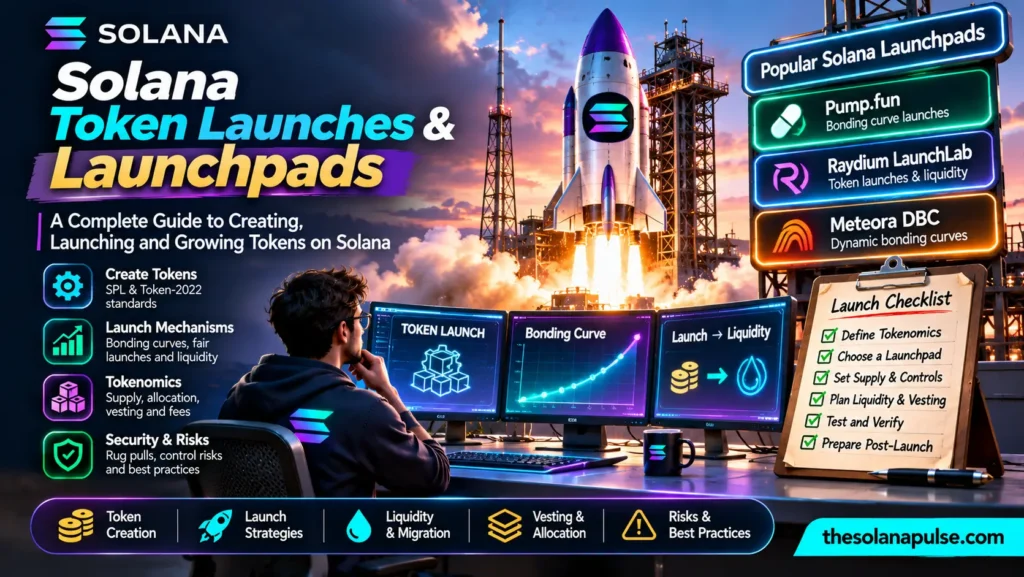

Solana DeFi in 2026 is no longer a single category dominated by token swaps. The ecosystem now contains mature markets for spot trading, lending, leveraged positions, liquid staking, LST liquidity, concentrated liquidity, token launches, perpetual futures and shared-security products.
That makes the phrase “best Solana DeFi protocol” less useful unless we define the job. Jupiter may be the best starting point for a user who wants efficient token routing and an increasingly broad DeFi interface. Kamino is better suited to users focused on lending, borrowing and collateral management. Raydium, Meteora and Orca solve different parts of the liquidity-provider problem. Jito and Sanctum are central to Solana’s liquid-staking economy.
There is also no sensible ranking based only on APY or token price. High yield can come from real borrowing demand, trading fees, staking rewards, temporary incentives or leverage. Those sources carry very different risks. A protocol with lower displayed yield can be the better choice if its mechanics are simpler, its liquidity is deeper and the user actually understands the position.
For this guide, “best” means the protocols that currently stand out for product usefulness, liquidity, integrations, market relevance and clear use cases. It does not mean every protocol is equally safe, nor that depositing into one is automatically a good investment.
As of mid-October 2026, DeFiLlama’s Solana rankings place Sanctum, Jupiter, Kamino, Raydium and Jito among the network’s largest protocols by TVL. The exact numbers move constantly, so this guide focuses on what the protocols actually do rather than freezing a leaderboard that can become stale next week.
- Best all-around Solana DeFi hub: Jupiter. Swaps, routing, lending/borrowing and other trading products make it one of the broadest entry points into Solana DeFi.
- Best lending-focused protocol: Kamino. Its product stack combines lending, borrowing, Multiply strategies, vaults and professional risk infrastructure.
- Best native DEX/liquidity ecosystem: Raydium. CPMM, CLMM, farms, token launch infrastructure and a large liquidity footprint make it a core Solana market layer.
- Best LST liquidity protocol: Sanctum. Infinity and INF create shared liquidity across a large universe of Solana liquid staking tokens.
- Best liquid staking + restaking infrastructure: Jito. JitoSOL combines staking and MEV-related rewards, while Jito (Re)staking extends staked assets into Node Consensus Networks.
- Best advanced LP toolkit: Meteora. DLMM, DAMM v2 and dynamic bonding curves give active liquidity providers and token launchers flexible infrastructure.
- Best straightforward concentrated-liquidity DEX: Orca. Whirlpools remain a strong option for users who want a cleaner LP and swap experience.
- Best advanced credit / prime-broker direction: marginfi / Project 0. The MRGN stack is evolving from traditional lending toward cross-venue collateral and unified margin.
- Perpetuals require extra caution in 2026. Drift remains an important Solana trading project, but its April 2026 exploit and ongoing recovery/relaunch make it inappropriate to present as a low-risk “best” choice without that context.
Best Solana DeFi Protocols 2026: Comparison Table
| Protocol | Best for | Main products | Complexity | Main risk to understand |
|---|---|---|---|---|
| Jupiter | All-around trading and DeFi access | Swap routing, Lend, borrowing, Multiply, perps and portfolio tools | Beginner → advanced | Each product has different smart-contract, leverage and liquidity risks |
| Kamino | Lending and collateral management | Earn, Borrow, Multiply, Swap, vaults and isolated/custom markets | Intermediate | Liquidation, oracle, collateral and market-parameter risk |
| Raydium | DEX liquidity and token markets | CPMM, CLMM, AMM, farms, LaunchLab, perps beta | Beginner → advanced | LP loss, token risk and thin-liquidity markets |
| Sanctum | LST swaps and diversified SOL staking liquidity | Infinity, INF, LST router and stake-pool infrastructure | Intermediate | LST, pool, liquidity and protocol dependencies |
| Jito | Liquid staking and restaking | JitoSOL, MEV rewards, restaking vaults and NCNs | Intermediate → advanced | Restaking adds extra operator/network/slashing-style risk |
| Meteora | Active liquidity provision and launches | DLMM, DAMM v2, Dynamic Bonding Curve, Alpha/Presale Vaults | Advanced | Range management, volatile-token and launch-market risk |
| Orca | Concentrated liquidity with cleaner UX | Whirlpools, swaps, LP positions and vaults | Beginner → intermediate | Concentrated LP positions can become one-sided and require management |
| marginfi / Project 0 | Advanced lending and cross-venue collateral | Lending, borrowing, staked collateral, loops and prime-broker architecture | Advanced | Leverage, liquidation and cross-venue dependency risk |
| Drift | Perpetual trading / watchlist | Perps, lending/borrowing, multi-collateral trading | Advanced | Major 2026 exploit and recovery/relaunch risk must be evaluated first |
How We Chose the “Best” Protocols
A DeFi protocol can rank highly on TVL and still be the wrong product for a specific user. Our selection uses several practical criteria.
Product usefulness
Does the protocol solve a real recurring problem such as routing swaps, borrowing against collateral, earning staking rewards or supplying liquidity?
Liquidity and integrations
Deep integrations matter because DeFi is composable. An LST becomes more useful when it can be traded, borrowed against and routed across multiple applications. A DEX is more useful when aggregators and wallets route order flow through its pools.
Risk transparency
Good documentation, published risk parameters, audits and clear liquidation or fee mechanics matter more than a flashy APY screen.
Product maturity
We prefer protocols with sustained usage and meaningful infrastructure over a newly launched farm offering temporarily extreme incentives.
Current status
DeFi changes quickly. A protocol that was a clear leader in 2025 can experience an exploit, migration or redesign in 2026. Current operational status matters.
1. Jupiter — Best Overall Solana DeFi Hub
Jupiter
Best overallBest for: swaps, routing, lending, borrowing and users who want one primary interface into Solana DeFi.
Jupiter began as a swap aggregator, and routing remains the product that made it foundational to Solana. Instead of forcing users to manually compare pools, an aggregator searches available liquidity and attempts to find an efficient execution route.
By 2026, Jupiter is much broader than a swap screen. Its current application describes itself as an “everything exchange” where users can swap tokens, lend and borrow, trade perpetuals and manage DeFi positions. Jupiter Lend is a non-custodial lending system where users can supply assets for yield, borrow against collateral and use Multiply-style leveraged strategies.
This breadth is Jupiter’s biggest advantage. A user can begin with simple swaps and later access lending or more advanced positions without learning an entirely separate ecosystem for every action.
Jupiter is especially valuable as an execution layer because other protocols can integrate its routing rather than building an independent liquidity network from scratch. That makes Jupiter important even to users who never think of themselves as “Jupiter users.”
Where Jupiter is strongest:
- Token swaps and liquidity routing
- Broad asset discovery and execution
- Integrated lending and borrowing through Jupiter Lend
- Leveraged/Multiply positions for advanced users
- Developer APIs that can embed Solana execution into other apps
Main risks: Jupiter is not one single risk bucket. A normal routed swap has very different risk from borrowing, leveraged lending or perpetual trading. Users should evaluate the specific product they are using rather than assuming the Jupiter brand makes every position equivalent.
For a deeper explanation of routing and swap execution, see our Jupiter Exchange — How It Works guide.
2. Kamino — Best for Lending, Borrowing and Managed Credit
Kamino
Best lendingBest for: supplying assets, borrowing, leveraged staking/Multiply strategies and users who want a mature collateral-management stack.
Kamino has grown into one of Solana’s largest DeFi protocols by building around lending and capital efficiency. Its current documentation organizes the product around Earn, Borrow, Multiply and Swap, with additional infrastructure for vaults, custom lending markets, curators and institutional risk managers.
The core lending model is familiar: users deposit assets into reserves, borrowers post collateral and borrow against it, interest rates react to utilization, and liquidations protect lenders when collateral value falls too far.
Where Kamino becomes more interesting is the product layer around that base. Multiply strategies can automate recursive borrowing for leveraged exposure, while vault infrastructure can allocate depositor funds across lending reserves according to curator-defined strategies.
Kamino’s documentation also shows a more institutionalized risk-management direction. Curators can configure market parameters, LTVs, liquidation thresholds, rate curves and oracles, with names such as Gauntlet, Steakhouse Financial and other professional risk teams appearing in the curator infrastructure.
Why Kamino stands out:
- Large lending-market footprint on Solana
- Clear separation between earning, borrowing and leveraged strategies
- Support for sophisticated collateral including LSTs
- Curated vault/market infrastructure
- Strong developer tooling and risk dashboards
Main risks: Borrowing introduces liquidation risk. Multiply strategies add leverage. Vaults add curator and strategy dependencies. A protocol can be technically sound while a user’s position is still badly constructed.
Official source: Kamino documentation ↗
3. Raydium — Best Native DEX and Liquidity Ecosystem
Raydium
Best DEX liquidityBest for: swaps, liquidity provision, new token markets and builders who need multiple AMM designs.
Raydium is one of the core liquidity venues on Solana and remains important because it is not built around only one type of pool.
Its 2026 documentation covers AMM v4, standard constant-product pools, concentrated-liquidity pools, farms, LaunchLab and a perps beta. The current recommended standard for many new pools is CPMM, while CLMM gives liquidity providers the ability to concentrate capital inside a price range.
This flexibility matters because different assets need different liquidity structures. A mature stable pair may benefit from highly capital-efficient concentrated liquidity. A new token may prefer a simpler pool or launch system. Raydium gives issuers and LPs multiple choices without leaving the protocol family.
Raydium is also tightly connected to the wider Solana execution stack. Aggregators can route through Raydium liquidity, meaning a user may trade against a Raydium pool without manually opening Raydium’s interface.
Why Raydium stands out:
- Multiple AMM designs for different markets
- Large and widely integrated liquidity base
- Concentrated liquidity for capital efficiency
- LaunchLab for new-token launches and graduation
- Developer SDK/API infrastructure
Main risks: LPs face price-range management, impermanent/divergence loss and token-specific risk. New-token markets can be especially dangerous because liquidity depth and token quality can change rapidly.
For the full product breakdown, see our Raydium — Complete Guide.
Official source: Raydium documentation ↗
4. Sanctum — Best for Solana LST Liquidity
Sanctum
Best LST liquidityBest for: users moving among Solana liquid staking tokens and holders who want diversified LST exposure through INF.
Sanctum solves a problem created by Solana’s success with liquid staking. If hundreds or thousands of validators and projects issue their own LSTs, each token cannot realistically maintain a deep independent SOL trading pool.
Sanctum’s Infinity pool acts as shared liquidity for many LSTs. Its documentation describes LST-to-LST, LST-to-SOL and SOL-to-LST swaps using the underlying SOL valuations of the staking assets.
INF is the token representing the Infinity pool itself. Because the pool holds a basket of reward-bearing LSTs, INF can accrue the underlying staking economics plus swap fees generated when users move among LSTs.
This makes Sanctum more than a staking front end. It is infrastructure for the liquidity layer of Solana staking.
Why Sanctum stands out:
- Shared liquidity across many LSTs
- INF creates diversified exposure to a basket of staking assets
- Supports direct movement between different LSTs
- Helps smaller validator LSTs avoid bootstrapping isolated liquidity
- Deep integration with the broader Solana staking ecosystem
Main risks: INF introduces pool-level exposure in addition to the underlying LST risks. Users should understand reserve composition, redemption mechanics and the fact that LSTs themselves depend on staking programs and validator performance.
Official source: Sanctum Infinity ↗
5. Jito — Best for Liquid Staking and Restaking
Jito
Best staking infrastructureBest for: SOL holders who want liquid staking, MEV-related staking economics and advanced users exploring restaking.
Jito’s core user product is JitoSOL. Users stake SOL through the Jito stake pool and receive a liquid token whose value accrues standard staking rewards plus eligible MEV-related rewards.
Because JitoSOL is an SPL token, it can remain productive elsewhere in DeFi rather than sitting only inside a native stake account. It is widely integrated into lending, liquidity and collateral markets.
Jito’s newer (Re)staking infrastructure expands that concept. Vaults can hold assets such as JitoSOL or other supported SPL tokens, issue liquid receipt tokens and delegate economic security to Node Consensus Networks. Those networks can use restaked assets to secure oracle systems, DePIN networks, offchain computation or other decentralized services.
That creates more potential yield—but also more risk. Restaking means the same economic asset may be exposed to additional operators, network rules, cooldown periods, fee structures and penalty mechanisms beyond normal SOL staking.
Why Jito stands out:
- Large, deeply integrated liquid staking ecosystem
- MEV-aware staking rewards
- JitoSOL is usable throughout Solana DeFi
- Restaking infrastructure creates new shared-security use cases
- Strong validator and operator network effects
Main risks: JitoSOL and restaking should not be treated as the same risk. Restaking vaults add extra protocol, operator and NCN dependencies. Higher expected yield comes with more moving parts.
See our Liquid Staking on Solana 2026 guide for a full JitoSOL, mSOL, JupSOL and INF comparison.
Official source: Jito documentation ↗
6. Meteora — Best for Advanced Liquidity Providers
Meteora
Best advanced LPBest for: active LPs, token launchers and users who want dynamic fee and concentrated-liquidity strategies.
Meteora describes itself as Solana’s composable liquidity layer, and its product set is clearly optimized for users who want more control over how liquidity is deployed.
Its DLMM design organizes concentrated liquidity into discrete price bins and uses volatility-aware dynamic fees. Within a bin, the design can offer zero-slippage swaps, while LPs can choose how to distribute capital across ranges.
DAMM v2 provides a constant-product style design with position NFTs, optional concentrated ranges and anti-sniper tooling. Meteora’s Dynamic Bonding Curve is designed for token launches that can automatically graduate into a DAMM pool.
This is powerful infrastructure, but it is more complex than simply depositing equal amounts into a passive pool and forgetting about it.
Why Meteora stands out:
- DLMM with dynamic fees and price bins
- Strong tooling for active LP strategies
- Launch infrastructure and programmable bonding curves
- Anti-bot / Alpha Vault tools for launches
- Developer tooling around liquidity primitives
Main risks: Advanced LP strategies can create a false sense of predictable yield. Range placement, token volatility, volume, fee generation and rebalancing all affect returns. Launch-market assets add another layer of speculative risk.
Official source: Meteora documentation ↗
7. Orca — Best for Simpler Concentrated Liquidity
Orca
Clean LP experienceBest for: users who want concentrated-liquidity exposure with a comparatively straightforward interface and established Whirlpools infrastructure.
Orca’s central product is Whirlpools, a concentrated-liquidity AMM. Instead of spreading capital across every possible price, LPs can choose a range where their assets actively provide liquidity.
This increases capital efficiency when the market stays inside the selected range. The downside is that an out-of-range position stops earning normal swap fees until price returns, and the token mix can become heavily one-sided as the market moves.
Orca also supports full-range positions for users who prefer a more passive approach, while developers can integrate Whirlpools through its open-source SDK.
Why Orca stands out:
- Mature concentrated-liquidity design
- Clean liquidity-management experience
- Full-range and concentrated approaches
- Developer-friendly Whirlpools tooling
- Good fit for users who do not need the full complexity of a launch-focused LP platform
Main risks: Concentrated liquidity is not passive staking. LP returns depend on trading volume, price range, token volatility and position management.
Official source: Orca documentation ↗
8. marginfi / Project 0 — Advanced Lending and Prime-Broker Infrastructure
marginfi has been one of Solana’s major lending systems, but the MRGN ecosystem in 2026 is evolving beyond a simple money-market product.
The existing marginfi documentation describes a fully decentralized borrowing and lending protocol with a risk engine, staked collateral, looping tools and broad market access. Newer Project 0 documentation describes a permissionless onchain prime broker built on mrgnLend v2, with cross-venue collateral and unified margin.
The direction is important because DeFi capital is often fragmented. A user may have a lending deposit in one protocol, LP position in another and trading collateral somewhere else. Prime-broker style infrastructure attempts to evaluate those positions inside a more unified risk account rather than forcing every venue to operate as an isolated balance sheet.
Where it can be useful:
- Advanced borrowing and lending
- Staked collateral
- Recursive/looped strategies
- Cross-venue collateral management
- Professional and programmatic margin use cases
Main risks: More unified collateral can increase capital efficiency, but it also increases dependency complexity. A failure or price shock in one connected venue may affect a broader margin account.
Official source: marginfi / Project 0 documentation ↗
9. Drift — Important Perps Protocol, but a 2026 Risk Caveat Is Mandatory
Why Drift is not ranked as a normal “best” recommendation here
Drift remains one of Solana’s historically important perpetual-trading protocols, but it suffered a major exploit on April 1, 2026. Drift and Tether subsequently announced a structured recovery plan, and Drift said it was rebuilding and relaunching with additional audits and security work. That history materially changes the risk discussion in 2026.
Before the incident, Drift’s product stack included perpetual futures, multi-asset collateral, lending/borrowing, vaults and advanced cross-margin trading. Drift v3 had launched in late 2025 with a focus on execution and capital efficiency.
After the April incident, Drift published recovery updates explaining that the platform would undergo a protocol reboot, independent audits and a redesigned security process before relaunch. Tether announced support for a recovery package aimed at affected users and the protocol’s return to operation.
That means Drift is still relevant when discussing Solana DeFi—especially perps—but a responsible 2026 guide should not place it next to an unaffected lending or DEX protocol without explaining the incident.
If considering Drift after its relaunch, verify:
- Which contracts/program IDs are current
- Whether the audited relaunch code is fully live
- How old positions and recovery claims are handled
- Current insurance/recovery mechanisms
- Whether the product you are using belongs to the rebuilt protocol rather than legacy infrastructure
Official source: Drift 2026 recovery update ↗
Which Solana DeFi Protocol Is Best for You?
| Goal | Protocol to research first | Why |
|---|---|---|
| Swap tokens at a competitive route | Jupiter | Aggregation searches liquidity rather than requiring manual venue comparison. |
| Lend USDC/SOL or borrow against collateral | Kamino | Large lending stack with risk parameters, vaults and collateral tools. |
| Provide general DEX liquidity | Raydium | Multiple AMM formats and broad Solana integration. |
| Actively manage concentrated liquidity | Meteora / Orca | Meteora offers advanced dynamic LP tools; Orca offers mature Whirlpools and simpler positioning. |
| Liquid stake SOL | Jito | JitoSOL combines staking with MEV-related economics and broad DeFi integrations. |
| Move between LSTs or hold a diversified LST pool | Sanctum | Infinity is purpose-built as shared LST liquidity; INF represents the pool. |
| Use advanced cross-venue collateral | Project 0 / marginfi | Prime-broker direction targets unified collateral and margin. |
| Trade perpetual futures | Research current Drift/Jupiter perps status carefully | Perps add leverage, liquidation and protocol-specific risk; Drift’s 2026 incident must be considered. |
Where Does Solana DeFi Yield Actually Come From?
Before chasing APY, identify the source.
Lending yield
Borrowers pay interest to use deposited liquidity. High supply APY usually means borrowing demand is high, liquidity is scarce or incentives are supplementing the market.
Trading fees
LPs earn part of the fees paid by traders. Yield therefore depends on volume relative to the amount of capital providing liquidity.
Staking rewards
LSTs such as JitoSOL derive base economics from SOL staking, with some products adding MEV or other validator revenue.
Incentive emissions
A protocol or token issuer may temporarily subsidize a pool. This can produce high APY that disappears when incentives end.
Leverage
Recursive strategies can multiply the spread between asset yield and borrowing cost. They can also multiply liquidation risk.
Restaking
Restaking adds rewards for securing additional networks or services. Those rewards compensate users for assuming additional protocol/operator risk.
If you cannot explain where the yield comes from in one sentence, do not deposit merely because the APY is high. “Yield” is payment from somewhere—borrowers, traders, staking emissions, protocol incentives or additional risk.
The Biggest Risks in Solana DeFi
Smart-contract risk
Audits reduce risk; they do not eliminate it. A bug in lending, AMM, oracle or accounting logic can still cause loss.
Liquidation risk
Borrowing and leverage can turn market volatility into forced selling. A position can be directionally correct long term and still be liquidated during a short-term move.
Oracle risk
Lending and derivatives depend on accurate pricing. Bad or stale oracle data can cause incorrect liquidations or insolvency.
Liquidity risk
A token may be redeemable in theory but difficult to sell instantly without major price impact.
LP risk
Liquidity providers can underperform simply holding the assets if prices move sharply relative to the chosen pool strategy.
Admin / upgrade risk
Some programs remain upgradeable or use multisigs and administrative authorities. Users should understand who can change parameters or code.
Protocol composability risk
A vault may deposit into another protocol, use an oracle from another provider and route trades through a third system. More composability creates more dependencies.
Wallet risk
Phishing and malicious transaction signing can drain a wallet regardless of how secure the protocol itself is.
For wallet selection and self-custody practices, see our Best Solana Wallets in 2026 and Phantom Wallet Guide 2026.
A Practical Checklist Before Using Any DeFi Protocol
- Use the official protocol domain; do not trust sponsored search results automatically.
- Confirm the token mint if you are interacting with a new or unfamiliar asset.
- Understand exactly what you deposit and what receipt token or position you receive.
- Read the liquidation threshold before borrowing.
- Check whether the APY comes from real fees or temporary incentives.
- Look at liquidity depth, not only TVL.
- Review current audits and recent security incidents.
- Check whether the program is upgradeable and who controls upgrade/admin authority.
- Start with a small transaction to verify the workflow.
- Keep SOL in the wallet for fees rather than deploying 100% of the balance.
- Separate long-term holdings from experimental DeFi positions.
- Do not use leverage unless you can explain the liquidation mechanics.
A Simple Solana DeFi Stack for Beginners
A beginner does not need nine protocols.
A reasonable learning sequence is:
- Wallet: Set up a trusted Solana wallet and learn transaction simulation and signing.
- Swap: Use Jupiter for a small token swap to understand routing.
- Staking: Learn native staking or a major LST before using leverage.
- Lending: Supply a small amount to a mature lending market such as Kamino before borrowing anything.
- Liquidity: Only after understanding price ranges and LP risk, experiment with Raydium, Orca or Meteora.
- Leverage/perps: Treat this as an advanced stage, not a natural next button to press because the interface offers it.
Solana’s low transaction costs make learning with small amounts possible. Use that advantage. There is no reason to make the first DeFi lesson expensive.
Why Liquid Staking Is So Important to Solana DeFi
One reason Solana DeFi is unusually interconnected is the role of LSTs.
A user can stake SOL, receive a liquid staking token, use that LST as collateral, lend it, provide liquidity with it or swap among staking products. Jito and Sanctum provide important pieces of this infrastructure, while lending protocols such as Kamino integrate LST collateral into broader credit markets.
This increases capital efficiency but creates layered risk. The same SOL may sit underneath an LST, which is then deposited into a lending market, which may then be used in a leveraged strategy.
Our Liquid Staking on Solana 2026 guide breaks down JitoSOL, mSOL, JupSOL and INF in detail.
What to Watch in Solana DeFi After 2026
The most important trend is convergence. Protocols that once did one thing are becoming broader financial platforms.
Jupiter expanded from aggregation into lending and other trading products. Kamino moved beyond simple vaults into a full lending and credit stack. Raydium combines AMMs, launches and new trading products. Jito expanded from liquid staking into restaking. marginfi’s Project 0 direction pushes toward onchain prime brokerage.
That convergence has two opposite effects. User experience can improve because fewer applications are needed. Risk can become harder to understand because one interface may expose several underlying protocols, leverage paths and collateral dependencies.
The protocols most likely to remain important are not simply those with the highest token valuation. They are the ones that become durable infrastructure: routing order flow, pricing collateral, hosting liquidity, securing stake or providing credit across many applications.
Best Solana DeFi Protocols FAQ
What is the best Solana DeFi protocol in 2026?
There is no universal winner. Jupiter is the strongest all-around starting point for swaps and broad DeFi access, Kamino is a leading lending choice, Raydium is a major DEX/liquidity venue, Sanctum specializes in LST liquidity and Jito is a major liquid-staking/restaking protocol.
Which Solana DeFi protocols have the most TVL?
As of mid-October 2026, DefiLlama places Sanctum, Jupiter, Kamino, Raydium and Jito among the largest Solana protocols by TVL. Rankings and dollar values change with markets and deposits, so TVL should not be used as a safety score.
What is the best Solana protocol for swapping tokens?
Jupiter is a strong first choice because it aggregates liquidity and searches routes across venues instead of limiting the user to one pool source.
What is the best Solana lending protocol?
Kamino is one of the strongest general lending options because of its market depth, collateral tooling, vault infrastructure and risk-management framework. Jupiter Lend and the marginfi/Project 0 ecosystem are also important alternatives with different designs.
What is the best protocol for staking SOL?
Native staking remains the simplest direct approach. For liquid staking, JitoSOL is one of the most integrated options. Sanctum is especially useful if you want access to many different LSTs or INF’s diversified LST pool.
Is Raydium or Jupiter better?
They solve different problems. Raydium is a liquidity venue with AMM pools and launch infrastructure. Jupiter is primarily a routing and broader DeFi interface that can route trades through liquidity sources such as Raydium. Many users use both indirectly in the same transaction.
Is Meteora better than Orca for LPs?
Meteora offers more advanced dynamic-liquidity and launch tooling, while Orca’s Whirlpools can be easier to understand for users focused primarily on concentrated liquidity. The better choice depends on how actively you want to manage the position.
Is high TVL proof that a DeFi protocol is safe?
No. TVL shows how much capital is deposited, not whether the code is exploit-proof or whether your strategy is safe. Large protocols can still suffer exploits, oracle failures or governance problems.
Is Drift safe to use after the 2026 exploit?
Drift announced a security-focused rebuild, independent audits and a recovery/relaunch plan after its April 2026 incident. Users should verify the current relaunch status, deployed programs and recovery terms directly from official Drift sources before deciding whether to use it.
Can beginners use Solana DeFi safely?
They can reduce risk by starting with simple swaps or non-leveraged positions, using official sites, learning wallet security and keeping position sizes small. Borrowing, LP ranges, looping and perpetual futures should be treated as advanced activities.
Final Verdict: The Best Solana DeFi Protocol Depends on the Job
Solana now has enough mature DeFi infrastructure that users no longer need one protocol to do everything.
Jupiter is the best general entry point because routing and its expanding product suite connect many parts of the ecosystem. Kamino stands out for lending and collateral management. Raydium remains a core liquidity venue. Sanctum is specialized infrastructure for the LST economy, while Jito is central to liquid staking and restaking. Meteora and Orca serve different types of liquidity providers.
The correct choice therefore starts with a question: What are you trying to do? Swap? Lend? Borrow? Stake? Provide liquidity? Trade with leverage? Once the goal is clear, compare protocols on liquidity, mechanics, integrations and risk rather than choosing the highest APY or loudest token narrative.
And in 2026, current status matters as much as brand recognition. Drift’s major exploit and recovery process is a reminder that even established DeFi protocols can change risk profile overnight.
The best Solana DeFi strategy is not using the largest number of protocols. It is using the smallest number of protocols necessary to achieve a goal you actually understand.