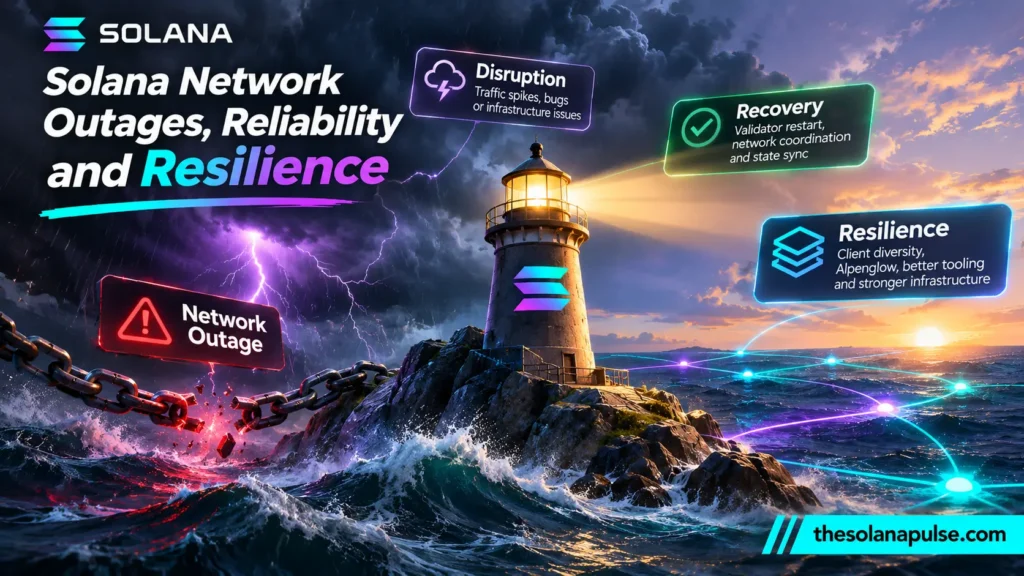

Solana developers have proposed an update to Agave, the network’s main validator software, to allow validators to stop processing blocks once a competing version has been finalized by the network. This proposal, detailed in a the original report, aims to reduce unnecessary computational work involved in processing blocks that will not be part of the permanent blockchain state.
- Anza developer Philippe Laferrière proposed changes to Agave to allow validators to abandon processing of blocks once a competing version is finalized.
- The proposal simplifies an earlier approach that involved suspending and potentially resuming block processing.
- This follows Solana’s October Alpenglow upgrade, which redesigned the consensus mechanism with a target to reduce block finality time.
Proposed Validator Software Update
Anza developer Philippe Laferrière submitted a proposal on GitHub suggesting improvements to Agave, Solana’s main validator client. The update would enable validators to stop executing transactions from a block once the network has finalized a competing version for the same slot.
Currently, validators may begin processing transactions from one block version before consensus is reached, potentially using computing resources on blocks that may not be finalized. The proposal would allow validators to abandon processing of the losing block immediately after finalization, avoiding unnecessary computation.
This approach simplifies an earlier method that considered temporarily suspending processing of competing blocks with the option to resume if needed. Instead, the new proposal relies on finalization to determine when processing can be permanently stopped, removing the need to manage suspension and resumption.
The proposal remains in draft form and depends on other updates, including changes to transaction scheduling within the validator client, being merged into Agave’s codebase.
Context and Recent Developments
The proposal follows Solana’s Alpenglow upgrade, rolled out in October, which redesigned the network’s consensus mechanism with the aim of reducing block finality time from roughly 12.8 seconds to about 150 milliseconds. This upgrade introduced Votor, a new consensus mechanism that allows blocks to be finalized more quickly through voting paths.
Alpenglow changed how validators communicate and removed votes from blocks, replacing vote fees with a flat admission fee per epoch. However, it did not alter the underlying transaction execution process.
Anza has not published estimates on how frequently validators encounter competing blocks that require abandoning ongoing execution or how much computing capacity could be recovered through this proposal.
At the recent Solana Breakpoint event in London, Anza CEO Brennan Watt outlined a development roadmap for 2027, including plans to double the network’s computing capacity and reduce compute units required for certain transactions. The roadmap also mentions future improvements to block distribution and transaction ordering mechanisms.
Related Development Efforts
Separately, Anza developers are working on a proposal to address delays in transaction scheduling within the validator client. Solana’s execution architecture allows parallel processing of transactions that do not compete for the same writable accounts, but transactions involving shared accounts require coordination.
The scheduler manages this coordination, and the proposed modification aims to reduce waiting times for other parts of the validator software. Laferrière’s block replay proposal depends on the scheduler modification being merged into Agave’s codebase.
For more on Solana’s infrastructure and scaling efforts, visit our layer-2 scaling coverage.