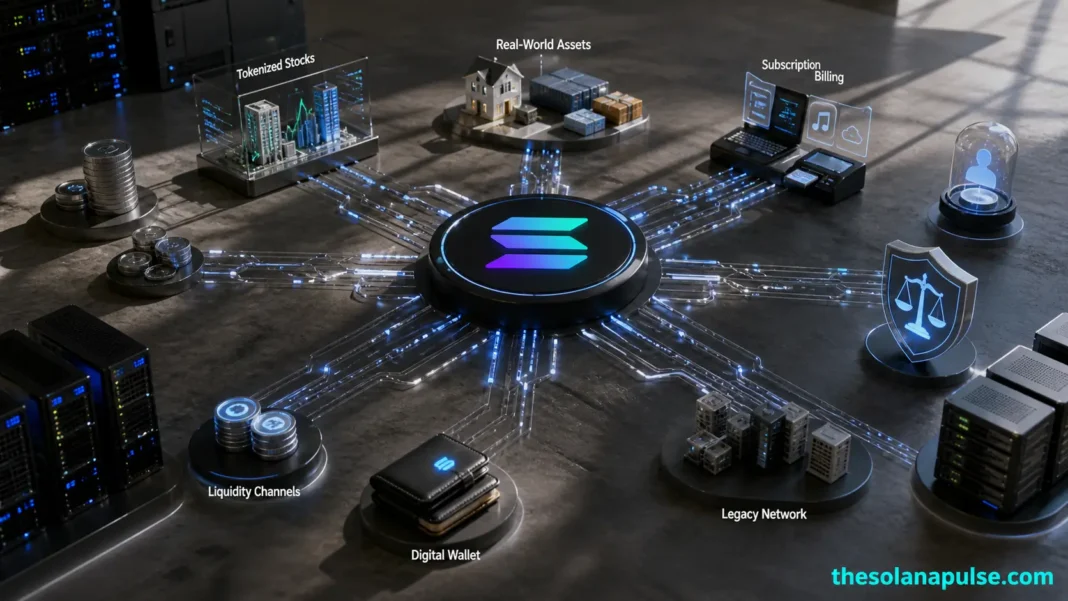
Solana is ambitiously positioning itself as the ‘Netflix of finance’ by expanding its ecosystem to integrate diverse financial services. This move is marked by significant strides in tokenized assets and subscription payments, highlighting Solana’s strategic ambition to offer a comprehensive financial platform.
The Story
Solana’s Chief Product Officer, Vibhu Norby, recently shared a bold vision for the blockchain’s future at Stanford, likening Solana to “the Netflix or the Amazon of finance.” This description aims to convey Solana’s goal of becoming a one-stop destination for trading stocks, real-world assets, and cryptocurrencies.
The network’s real-world asset (RWA) sector has reached a valuation of $3.9 billion, encompassing 2,676 distinct assets held by nearly 340,000 users. Solana’s broader network secures approximately $50 billion in assets, with daily trading volumes around $3.4 billion, underscoring its growing financial footprint.
Strategic Rationale
Solana’s expansion into tokenized stocks and subscription services is not merely about listing assets. The introduction of stock tokenization through its Backpack wallet allows users to access equity markets directly from their crypto wallets. This capability positions Solana uniquely against other blockchains by integrating conventional financial instruments directly into its ecosystem.
Additionally, Solana’s rollout of native subscription and recurring payment functionalities is a strategic move to capture part of the $275 billion global subscription billing market. By embedding subscription capabilities at the protocol level, Solana offers developers tools that many competing blockchains lack, potentially increasing adoption and ecosystem stickiness.
Ecosystem Implications
This strategic expansion carries significant implications for Solana’s ecosystem. By integrating tokenized assets and advanced financial tools, Solana enhances its appeal to both developers and end-users, creating a more comprehensive financial ecosystem. These advancements are likely to attract increased developer activity and user engagement, potentially boosting Solana’s network effect.
However, this ambition is not without challenges. Solana faces stiff competition from Ethereum, which remains a stronghold for institutional RWA projects. With major funds like BlackRock’s BUIDL and Franklin Templeton utilizing Ethereum, Solana must demonstrate clear advantages to sway institutional projects to its platform.
Competitive Positioning
Despite its technical strengths, Solana’s path forward involves navigating regulatory landscapes that are still evolving, particularly around tokenized securities. The SEC’s scrutiny poses a potential risk for platforms offering stock trading through crypto wallets, requiring strategic licensing and compliance measures, as evidenced by Backpack’s move to secure licensing in regulated jurisdictions.
Positioning itself against Ethereum, Solana must leverage its speed and lower transaction costs to appeal to a broader base of users and developers. Its success in doing so could shift market perception and adoption in its favor, positioning Solana as a leading blockchain for integrated financial services.
Solana’s strategic push into tokenized assets and subscriptions could redefine the financial blockchain landscape.
Editor’s Insight
TheSolanaPulse’s original analytical take: Solana’s ambition to become the ‘Netflix of finance’ reflects its broader strategy to integrate traditional finance within a blockchain framework. This approach not only diversifies its offerings but also positions Solana as a competitive alternative to Ethereum.
Looking ahead, Solana’s ability to navigate regulatory challenges while maintaining technological superiority will be crucial. As it continues to develop its ecosystem, Solana’s real test will be its capacity to drive widespread adoption among both institutional and retail users.