
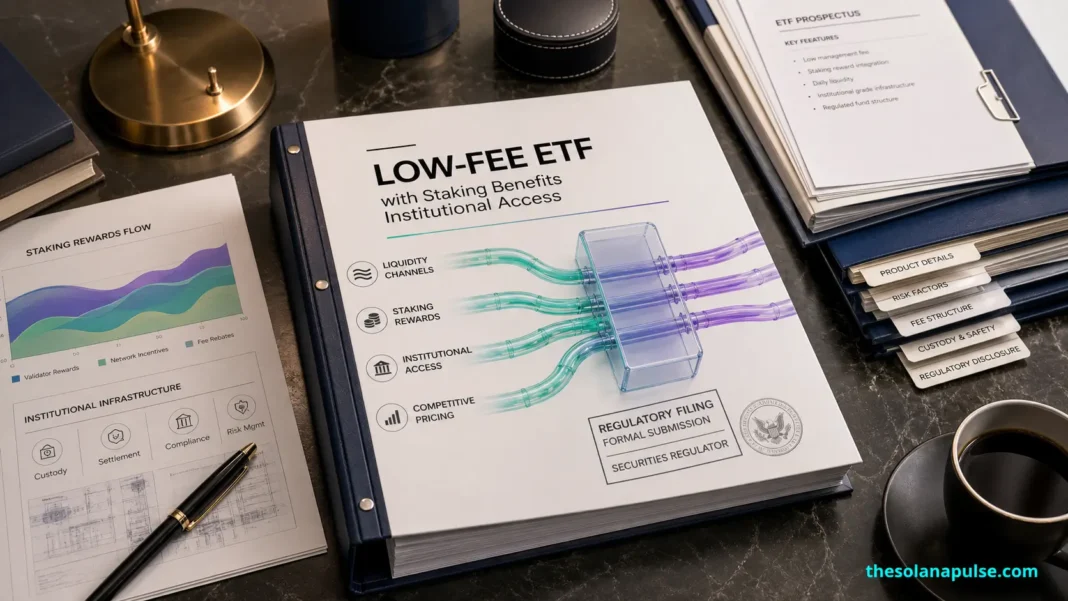
Morgan Stanley’s recent filing for a Solana ETF with a remarkably low annual sponsor fee of 0.14% has sent ripples through the institutional investment community. By integrating staking rewards, the bank aims to provide investors with a unique edge, potentially reshaping the competitive landscape for crypto ETFs.
The Decision
Morgan Stanley’s amended S-1 registration with the SEC for the Morgan Stanley Solana Trust (ticker MSOL) marks a significant move in the crypto ETF space. The proposed ETF, alongside its Ethereum counterpart, boasts a sponsor fee of just 0.14%, undercutting competitors like Grayscale and Franklin Templeton. This strategic pricing aims to attract institutional investors seeking cost-effective exposure to Solana’s growing ecosystem.
The addition of a staking structure further distinguishes MSOL. With 95% of staking rewards remaining within the trust, investors can benefit from compounding returns, enhancing their overall yield. The implementation partners, including Figment and Galaxy Blockchain Infrastructure, ensure robust staking operations.
Industry Reaction
The crypto industry has responded with keen interest to Morgan Stanley’s aggressive pricing strategy. By offering a lower fee than major players like Grayscale and Franklin Templeton, Morgan Stanley positions itself as a formidable competitor in the crypto ETF market. The inclusion of staking rewards enhances the appeal, offering a tangible benefit over traditional spot ETFs.
Industry experts suggest that this move could spur a wave of price adjustments across the ETF landscape, as competitors may need to reevaluate their fee structures to remain attractive to cost-sensitive institutional investors.
Precedent & Implications
Morgan Stanley’s methodology in launching its ETFs reflects a calculated approach to gaining a competitive edge. The bank’s initial Bitcoin Trust, launched in April 2026, set the groundwork for its current filings. With the Ethereum and Solana trusts, Morgan Stanley not only expands its crypto offerings but also challenges existing market players on cost and benefits.
Should the SEC approve these filings, it could set a new precedent for future ETF products, emphasizing the importance of fee structures and additional benefits like staking in attracting institutional capital.
Market Response
While the market awaits the SEC’s decision, Morgan Stanley’s bold move has already piqued investor interest. The promise of a low-cost, high-reward product could attract substantial inflows once regulatory approval is secured. Investors are particularly drawn to the staking component, which offers a competitive advantage over non-staking ETFs.
As the SEC reviews these filings, the anticipation builds around how this could influence Solana’s standing in the crypto investment space, particularly in comparison to Ethereum and Bitcoin.
Morgan Stanley’s strategic pricing could ignite a transformative shift in the ETF landscape, challenging existing norms.
Editor’s Insight
TheSolanaPulse sees Morgan Stanley’s filing as a pivotal moment for Solana’s institutional presence. By offering a competitively priced product with staking benefits, Morgan Stanley not only disrupts the pricing model but also sets a new standard for what institutional investors might expect from crypto ETFs.
As we look forward, the key will be how other financial giants respond. Will they adjust their fee structures, or introduce similar staking rewards? The outcome of the SEC’s decision could be a bellwether for the industry’s next move.